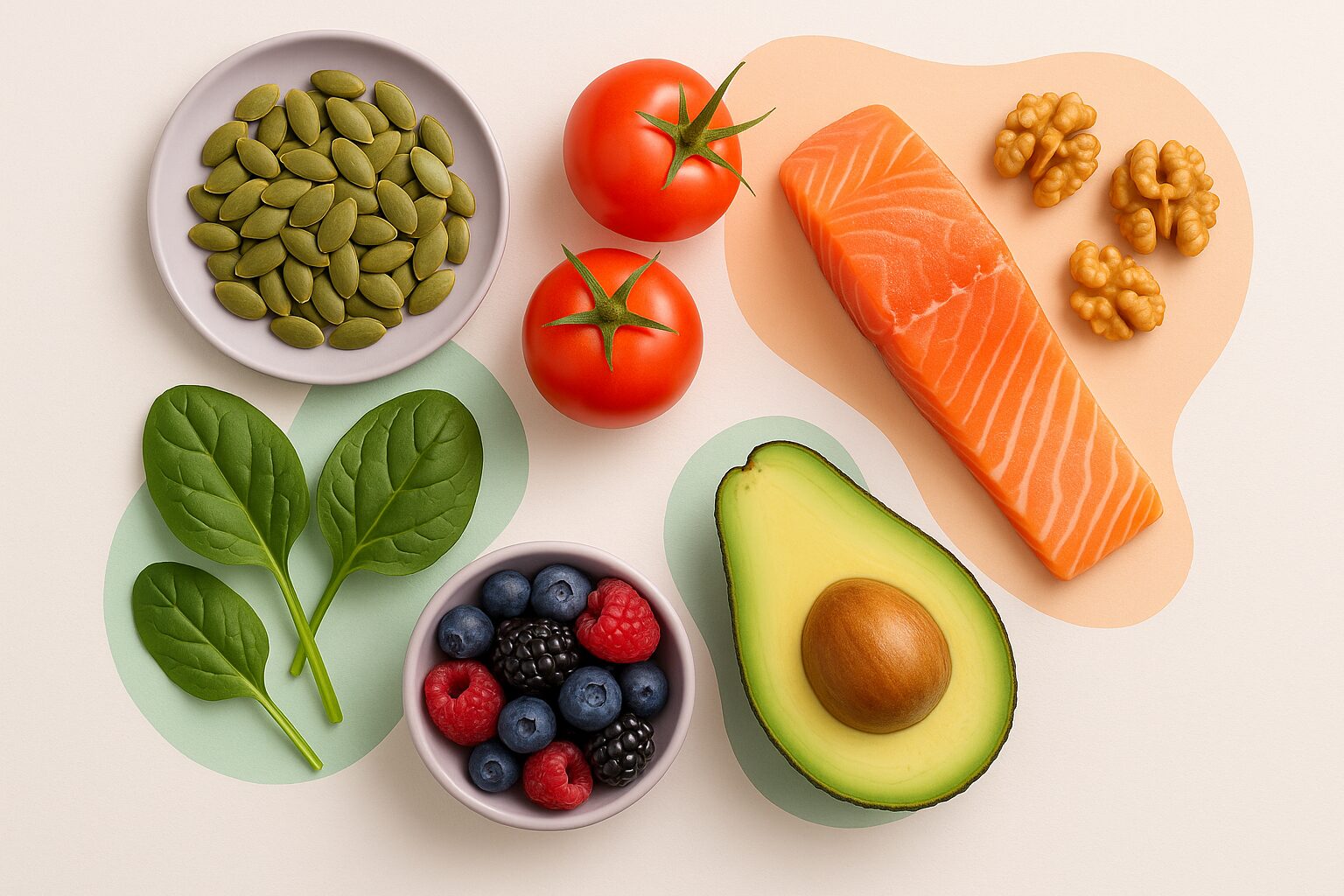
Food is the most underused intervention in BPH. Three diet patterns have been replicated in observational studies and small trials to reduce LUTS (lower urinary tract symptoms) and prostate inflammation: the Mediterranean diet, a tomato-rich Italian pattern, and an East Asian green tea / cruciferous pattern. This is the consolidated food list that shows up across all three.
Tomatoes — the lycopene engine
Lycopene is fat-soluble and concentrates in the prostate. Cooked tomato products (sauce, paste, soup) deliver 4-10x more bioavailable lycopene than raw tomatoes. Aim for 1/2 cup of tomato sauce 5+ times per week plus a tablespoon of olive oil for absorption. See the lycopene deep dive.
Pumpkin seeds — zinc + phytosterols in one bite
A small handful (28 g / 1 oz) of pumpkin seeds delivers ~2 mg zinc plus delta-7-sterols, the active compound implicated in BPH symptom relief. German Commission E approves pumpkin seed extracts for BPH. Read the full pumpkin seed evidence.
Green tea — EGCG for prostate volume
Epigallocatechin gallate (EGCG), green tea’s primary catechin, has shown anti-proliferative effects in prostate epithelial cell lines and modest volume reductions in small clinical trials. Three to four cups/day is the typical dose. See green tea EGCG and prostate volume.
Cruciferous vegetables — sulforaphane
Broccoli, kale, cauliflower, Brussels sprouts, cabbage. The Health Professionals Follow-up Study linked higher cruciferous intake to lower BPH risk. Aim for 1.5 cups/day cooked.
Fatty fish & omega-3
Wild salmon, sardines, mackerel, anchovies, herring 2-3x/week. The anti-inflammatory EPA/DHA ratio matters more for prostatic inflammation than raw omega-3 totals.
The shopping list
| Food | Active compound | Target frequency | Evidence |
|---|---|---|---|
| Cooked tomato sauce | Lycopene | 5+ servings/wk | Strong observational |
| Pumpkin seeds | Delta-7-sterols + zinc | Daily 1 oz | Commission E approved |
| Green tea | EGCG | 3-4 cups/day | Small RCT positive |
| Broccoli / cruciferous | Sulforaphane | 1.5 cups/day cooked | Cohort positive |
| Salmon / sardines | Omega-3 EPA/DHA | 2-3 svgs/wk | Anti-inflammatory |
| Walnuts | ALA + zinc | 1 oz/day | Mechanistic |
| Pomegranate | Punicalagins | 1 cup juice/day | PSA trajectory data |
| Garlic + onion | Allium sulfides | Daily | Cohort signal |
What to cut
Equally important: dairy in large quantities, red meat at every meal, alcohol over 7 drinks/week, sugary drinks. Full list: foods to avoid with BPH and caffeine and alcohol effects on nocturia.
Frequently Asked Questions
How fast does diet alone shrink the prostate?
Diet alone is unlikely to reduce prostate volume measurably in under 6 months. But symptoms (IPSS) often improve within 4-8 weeks because of reduced bladder irritation and lower inflammation.
Is dairy bad for the prostate?
High dairy intake (>4 servings/day) correlates with BPH progression in some cohort studies. Moderate intake (1-2 servings) is not strongly linked.
Are tomato supplements as good as cooked tomatoes?
Standardised lycopene supplements (15 mg) appear comparable in PSA trials but lack the synergistic effect of the full tomato matrix (potassium, vitamin C, carotenoid mix). Whole foods preferred when possible.
Does soy help or hurt the prostate?
Moderate fermented soy (tempeh, miso, edamame) appears beneficial — isoflavones are weak phyto-estrogens that can modulate prostate growth. Avoid heavy processed soy isolate.
Sources & Further Reading
- Urology Care Foundation — Prostate health & nutrition
- NIH — Lycopene and prostate health
- Harvard T.H. Chan — Tomatoes & lycopene
- Mayo Clinic — Mediterranean diet
- NIH PubMed — Cruciferous & BPH